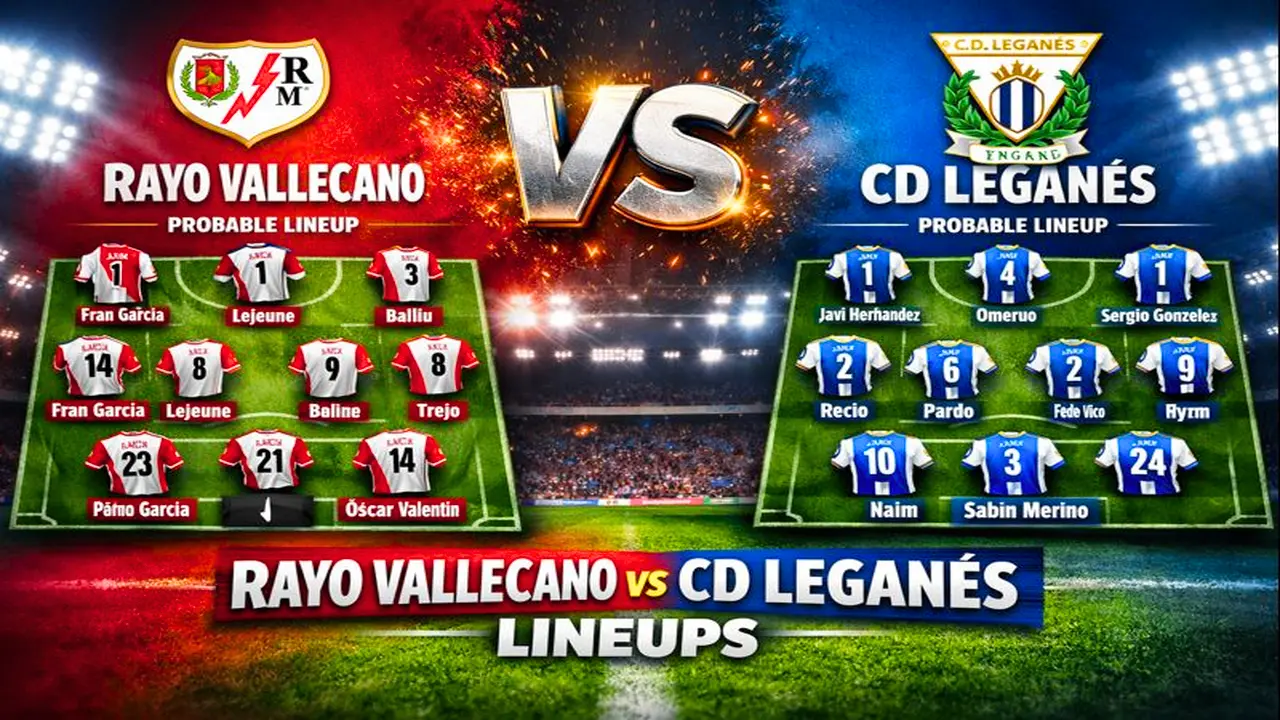
Football matches are often decided long before the referee’s first whistle, and one of the most important pre-match factors is the team selection. Understanding how managers set up their squads, which players start, and how formations influence the flow of the game offers deep insight into the final result. In this detailed article, we take a comprehensive look at (Rayo vallecano vs cd leganés lineups), breaking down the starting elevens, tactical approaches, substitutions, key performers, and overall match dynamics.
This in-depth analysis is designed for football fans, analysts, and bloggers who want a complete informational resource presented in a natural, human tone. Every section focuses on clarity, readability, and value, ensuring you can fully understand how the rayo vallecano vs cd leganés lineups shaped the encounter.
Match Context and Importance of Lineups
Before diving into the tactical details, it is important to understand why this fixture mattered. Rayo Vallecano and CD Leganés are clubs known for their discipline, organization, and strong identity. When these sides meet, the battle is often decided by structure rather than flair.
The rayo vallecano vs cd leganés lineups reflected this reality. Both managers prioritized balance, defensive solidity, and midfield control. Rather than experimenting, they selected players familiar with their systems, showing respect for the opponent and the competitive nature of the match.
Lineups are more than just names on a sheet. They reveal intent, strategy, and sometimes even fear or confidence. In this fixture, the selections clearly showed how each coach planned to approach the game.
Rayo Vallecano Starting Lineup Breakdown
Rayo Vallecano entered the match with a well-structured and familiar setup. Their lineup was designed to maintain possession, press intelligently, and exploit spaces between the lines.
Goalkeeper and Defensive Unit
Rayo’s goalkeeper played a crucial role, not only as a shot-stopper but also as the first point of build-up. Confident distribution allowed Rayo to avoid unnecessary pressure and maintain composure from the back.
The defensive line consisted of disciplined full-backs and reliable center-backs. Their responsibilities were clearly defined:
- Maintain a compact shape
- Prevent Leganés from playing through the middle
- Support midfield progression when space allowed
This defensive structure was a key reason the rayo vallecano vs cd leganés lineups favored Rayo’s control in key moments.
Midfield Balance and Control
Rayo’s midfield pairing was selected for both defensive coverage and forward progression. One midfielder stayed deeper to protect the back line, while the other focused on ball circulation and tempo control.
Ahead of them, creative midfielders operated between the lines, constantly looking for pockets of space. Their movement forced Leganés to stay compact, limiting their attacking freedom.
Attacking Setup
Rayo’s attacking players were chosen for their work rate as much as their technical ability. The lone striker served as a focal point, holding up the ball and allowing midfield runners to join the attack.
Wingers stretched the pitch, creating width and forcing Leganés’ defensive line to shift laterally. This attacking structure was a defining feature of the rayo vallecano vs cd leganés lineups, emphasizing patience over reckless attacking.
CD Leganés Starting Lineup Breakdown
CD Leganés approached the match with a more conservative mindset, focusing on defensive solidity and quick transitions.
Defensive Shape and Structure
Leganés set up with a defensive-heavy formation, often appearing as a five-man back line. This allowed them to:
- Close down central areas
- Protect against wide overloads
- Absorb pressure without losing shape
The defenders were instructed to clear danger efficiently rather than risk building from the back. This cautious approach reflected their respect for Rayo’s attacking movement.
Midfield Responsibilities
The Leganés midfield was compact and hardworking. Their primary task was to disrupt Rayo’s rhythm, block passing lanes, and recover possession quickly.
Rather than pushing forward aggressively, Leganés focused on maintaining positional discipline. This decision heavily influenced the flow of the game and was a direct consequence of the rayo vallecano vs cd leganés lineups selected.
Attacking Strategy
Up front, Leganés relied on limited but calculated opportunities. Their forward players were expected to:
- Hold the ball under pressure
- Draw fouls in advanced areas
- Capitalize on counter-attacks
While this approach limited their attacking numbers, it ensured defensive stability for long periods.
Formation Comparison and Tactical Intent
One of the most fascinating aspects of the match was the contrast in formations. The rayo vallecano vs cd leganés lineups showcased two different footballing philosophies.
Rayo’s formation focused on:
- Midfield dominance
- Controlled pressing
- Gradual build-up play
Leganés’ formation emphasized:
- Defensive compactness
- Minimal risk
- Quick transitions when possible
This tactical contrast created a chess-like battle, with each side trying to impose its style without exposing weaknesses.
Key Player Roles That Defined the Match
Certain players stood out not necessarily because of goals or assists, but due to how their roles influenced the overall balance of the game.
Rayo Vallecano Key Contributors
Rayo’s central midfielders were instrumental in dictating tempo. Their ability to recycle possession prevented Leganés from sustaining attacks.
The wide players also played a crucial role, constantly tracking back to support the defense while offering an outlet going forward.
CD Leganés Key Contributors
For Leganés, defensive leaders were vital. Clear communication and positional awareness helped them withstand prolonged pressure.
The goalkeeper, in particular, played a decisive role by organizing the defense and making important saves when required.
These individual contributions reinforced how the rayo vallecano vs cd leganés lineups were built around responsibility and discipline rather than individual flair.
Substitutions and In-Game Adjustments
Lineups do not remain static throughout a match. Substitutions often reveal a manager’s adaptability and understanding of the game’s momentum.
Rayo Vallecano Substitutions
Rayo introduced fresh legs in attacking areas during the second half. These substitutions:
- Increased pressing intensity
- Added pace against tired defenders
- Helped maintain control in the final stages
The changes aligned perfectly with their original game plan.
CD Leganés Substitutions
Leganés’ substitutions were largely reactive. Defensive reinforcements were introduced to preserve structure, while limited attacking changes aimed to exploit late counter-attacks.
These adjustments highlighted the cautious nature of their strategy, rooted firmly in the rayo vallecano vs cd leganés lineups chosen from the start.
Impact of Discipline and Match Events
Discipline played a significant role in shaping the game. Cards and fouls influenced momentum and forced tactical adjustments.
For Leganés, maintaining composure was essential due to their defensive approach. Any lapse in discipline risked collapsing their compact structure.
Rayo, on the other hand, used fouls strategically to stop counter-attacks and regain positional control. This intelligent game management was a direct reflection of their lineup balance.
Statistical Influence of the Lineups
While statistics do not tell the entire story, they provide valuable context.
- Rayo enjoyed higher possession due to their midfield setup
- Leganés recorded more clearances and defensive actions
- Passing accuracy favored Rayo, reflecting their build-up focus
These numbers align closely with expectations derived from the rayo vallecano vs cd leganés lineups, confirming that both teams executed their plans effectively.
What the Lineups Reveal About Team Identity
Every team has an identity, and lineups are one of the clearest expressions of that identity.
Rayo Vallecano’s selection emphasized:
- Collective movement
- Tactical flexibility
- Controlled aggression
CD Leganés’ lineup highlighted:
- Defensive resilience
- Tactical caution
- Team-first mentality
The rayo vallecano vs cd leganés lineups were not just about winning one match but reinforcing long-term philosophies.
Lessons for Future Matches
Analyzing this fixture provides valuable lessons for future encounters.
Rayo may continue refining their attacking patterns while maintaining defensive balance. Their lineup choices suggest confidence in squad depth and tactical clarity.
Leganés might look to introduce more attacking options in similar matches, especially when chasing a result. However, their disciplined approach remains a strong foundation.
These insights make the rayo vallecano vs cd leganés lineups an excellent case study for understanding tactical football.
Why Lineup Analysis Matters for Fans and Analysts
For fans, lineups offer excitement and anticipation. For analysts and writers, they provide structure and narrative.
Understanding the rayo vallecano vs cd leganés lineups allows readers to:
- Predict match flow
- Identify key battles
- Appreciate managerial decisions
This depth of understanding transforms passive viewing into active engagement.
Conclusion
The match between Rayo Vallecano and CD Leganés was a perfect example of how football is shaped by preparation and structure. From the first whistle to the final moments, the rayo vallecano vs cd leganés lineups influenced every aspect of the game.
Rayo’s balanced and proactive approach contrasted with Leganés’ disciplined and defensive setup, creating a compelling tactical duel. By analyzing formations, player roles, substitutions, and match events, we gain a deeper appreciation of how football truly works beyond goals and highlights.
For anyone seeking a complete, informational breakdown, this detailed analysis of the rayo vallecano vs cd leganés lineups offers clarity, insight, and lasting value.
Frequently Asked Questions (FAQs)
1. Why are the rayo vallecano vs cd leganés lineups so important to analyze?
Because lineups reveal tactical intent, player roles, and how each team plans to control the match.
2. Which formation did Rayo Vallecano use in this match?
Rayo Vallecano used a balanced formation focused on midfield control and structured attacking play.
3. How did CD Leganés approach the match tactically?
CD Leganés adopted a defensive setup, prioritizing compactness and counter-attacking opportunities.
4. Did substitutions significantly change the game?
Yes, substitutions helped Rayo maintain pressure and allowed Leganés to preserve defensive stability late in the match.
5. What can future teams learn from the rayo vallecano vs cd leganés lineups?
Teams can learn the importance of balance, discipline, and aligning player selection with tactical philosophy.
Read More: Cricfooty Explained A Complete Informational Guide for Cricket and Football Fans
About the Author