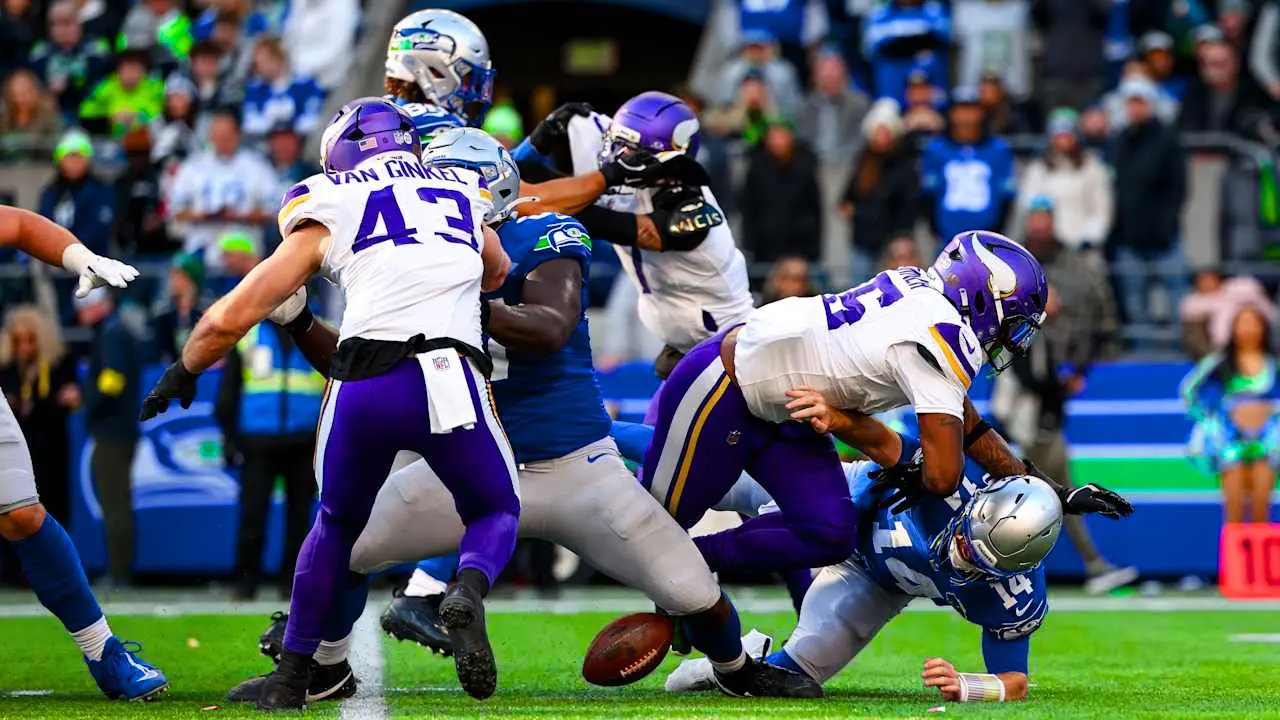
The clash between the Minnesota Vikings and the Seattle Seahawks delivered one of the most statistically lopsided games of the NFL season. While many matchups are decided by late drives or narrow margins, this contest told a very different story—one defined by defensive pressure, turnovers, and missed opportunities.
This article presents a full informational breakdown of the (Minnesota vikings vs seahawks match player stats), focusing on individual performances, unit-by-unit analysis, and the broader meaning of the numbers. Rather than hype or speculation, this is a stat-based look at how the game unfolded and why the final score reflected complete control by Seattle.
Game Overview and Final Score Context
The matchup concluded with Seattle earning a 26–0 shutout victory over Minnesota. Shutouts are rare in modern NFL football, making this result notable before even examining individual statistics. From the opening drive onward, Seattle controlled field position, tempo, and possession, while Minnesota struggled to generate rhythm on offense.
Despite relatively modest offensive yardage from Seattle, the game never felt competitive due to repeated Minnesota turnovers and the Seahawks’ ability to convert mistakes into points. Understanding the (Minnesota vikings vs seahawks match player stats) requires looking beyond raw yardage totals and focusing on efficiency, ball security, and defensive execution.
Minnesota Vikings Offensive Player Stats Breakdown
Quarterback Performance Under Pressure
Minnesota entered the game relying on a young quarterback making his first NFL start. The stat line reflects the difficulty of that assignment against a disciplined defense.
- Passing Attempts: 30
- Completions: 19
- Passing Yards: 126
- Interceptions Thrown: 4
The interception total was the defining statistic of the Vikings’ offensive performance. Several turnovers occurred in Minnesota territory, immediately flipping momentum and field position. The Seahawks disguised coverages effectively, forcing late reads and rushed throws.
In the context of minnesota vikings vs seahawks match player stats, this quarterback performance highlights how turnovers can outweigh completion percentage or passing volume.
Rushing Game and Ground Production
The Vikings’ running game never found traction. Early negative plays forced the offense into predictable passing situations, allowing Seattle’s defensive front to attack aggressively.
- Total Team Rushing Yards: Under 60
- Longest Rush: Fewer than 15 yards
- Red Zone Rush Attempts: 0
Without a consistent run threat, Minnesota struggled to manage down-and-distance scenarios. This lack of balance played directly into Seattle’s defensive game plan.
Receiving Unit and Target Distribution
While several receivers managed modest gains, none were able to break free for explosive plays.
- Leading Receiver Yards: Under 50
- Explosive Pass Plays (20+ yards): 0
- Drops and Contested Catches: Multiple missed opportunities
Seattle’s secondary maintained tight coverage throughout the game, forcing short completions that were immediately tackled. From a statistical standpoint, the Vikings’ receivers accumulated yards without impact, a key takeaway from the minnesota vikings vs seahawks match player stats.
Seattle Seahawks Offensive Player Stats Breakdown
Quarterback Efficiency Over Volume
Seattle did not rely on heavy passing volume, instead focusing on smart decision-making and field position.
- Completions: 14
- Attempts: 26
- Passing Yards: 128
- Touchdowns: 0
- Interceptions: 0
While these numbers may appear modest, they were exactly what Seattle needed. Avoiding turnovers allowed the defense and special teams to dictate the game.
Rushing Attack and Time Control
Seattle’s rushing game played a crucial role in maintaining control.
- Rushing Touchdowns: 1
- Longest Rush: 17 yards
- Time of Possession Advantage: Significant
A key rushing touchdown provided breathing room early, allowing Seattle to remain patient offensively. In reviewing minnesota vikings vs seahawks match player stats, this patience stands out as a strategic success.
Receiving Contributions and Situational Impact
Seattle’s receivers focused on moving the chains rather than chasing big plays.
- Third-Down Conversions via Passing: High efficiency
- Drops: Minimal
- Yards After Catch: Controlled but effective
These situational completions kept Minnesota’s defense on the field and prevented any momentum swings.
Defensive Player Stats Seattle’s Game-Changing Unit
Turnovers and Interceptions
Seattle’s defense delivered one of the most dominant performances of the season.
- Total Takeaways: 5
- Interceptions: 4
- Defensive Touchdowns: 1
Ernest Jones IV was the standout performer, recording multiple interceptions and returning one for a touchdown. His awareness in zone coverage repeatedly baited throws into traffic.
These defensive numbers are the backbone of the minnesota vikings vs seahawks match player stats, explaining the shutout result more than any offensive metric.
Pass Rush and Pocket Disruption
Seattle’s front seven applied consistent pressure without excessive blitzing.
- Sacks: Limited but timely
- Quarterback Hits: Frequent
- Pressured Throws: Numerous
The Vikings quarterback rarely had a clean pocket, contributing directly to interception totals and stalled drives.
Red Zone and Third-Down Defense
Seattle’s defense did not allow Minnesota to enter the red zone even once.
- Red Zone Trips Allowed: 0
- Third-Down Conversion Rate Allowed: Very low
This level of situational dominance is rare and underscores why the Vikings were held scoreless.
Special Teams and Field Position Impact
While defense dominated headlines, special teams quietly added points.
- Field Goals Made: 4
- Longest Field Goal: Beyond 50 yards
- Kick Coverage: No long returns allowed
Consistent scoring from field goals ensured Seattle capitalized on every mistake. From a statistical lens, special teams efficiency often goes unnoticed, yet it plays a vital role in understanding minnesota vikings vs seahawks match player stats.
Comparing Team Stats Side by Side
Total Yards vs Points Scored
Minnesota accumulated over 150 total yards but scored zero points. Seattle gained fewer than 300 yards yet scored 26. This disparity illustrates how turnovers and field position outweigh raw production.
Turnover Margin
- Minnesota: –5
- Seattle: +5
Turnover margin alone accounts for the final score gap and remains the single most important statistic from the game.
Historical Context of Vikings vs Seahawks Matchups
Historically, games between Minnesota and Seattle have often been competitive and physical. However, this contest stands out due to the shutout and turnover differential.
In previous meetings, both teams typically traded scores and relied on late-game execution. This game broke that pattern, becoming one of the most one-sided results in the series.
Looking at minnesota vikings vs seahawks match player stats across eras, defensive dominance has always influenced outcomes, but rarely to this extent.
Key Takeaways from the Player Stats
For the Minnesota Vikings
- Ball security remains a critical area of improvement
- Offensive balance is essential against elite defenses
- Young quarterbacks face steep learning curves under pressure
For the Seattle Seahawks
- Defense can dictate outcomes without offensive explosions
- Turnovers create scoring opportunities even without touchdowns
- Discipline and patience win low-tempo games
These lessons emerge clearly when reviewing the minnesota vikings vs seahawks match player stats in detail.
What This Game Means Going Forward
For Minnesota, the game serves as a reminder that rebuilding phases are defined by learning moments. While the result was harsh, the experience gained by younger players will shape future performances.
For Seattle, this victory reinforces their identity as a defense-first team capable of winning games through execution rather than spectacle.
From a league-wide perspective, this matchup will be remembered as a textbook example of how preparation and discipline outperform raw athleticism.
Final Thoughts on Minnesota Vikings vs Seahawks Match Player Stats
This game was not decided by highlight-reel touchdowns or last-second drama. It was decided by preparation, discipline, and defensive awareness. The numbers tell a clear story—Seattle protected the football, forced mistakes, and converted opportunities into points.
A thorough review of the minnesota vikings vs seahawks match player stats reveals how every unit contributed to the final result, from linebackers reading the quarterback’s eyes to kickers adding steady points. For fans and analysts alike, this matchup provides valuable insight into how games are truly won at the professional level.
Frequently Asked Questions (FAQs)
1. What was the final score of the Minnesota Vikings vs Seahawks game?
The Seattle Seahawks defeated the Minnesota Vikings with a 26–0 shutout victory.
2. Who was the standout player in the game?
Linebacker Ernest Jones IV stood out defensively with multiple interceptions and a touchdown return.
3. How many turnovers did Minnesota commit?
Minnesota committed five total turnovers, including four interceptions.
4. Why did Seattle win despite modest offensive stats?
Seattle’s defense and special teams controlled field position and capitalized on turnovers, making offensive explosiveness unnecessary.
5. What is the main takeaway from the Minnesota Vikings vs Seahawks match player stats?
The key takeaway is that turnovers and defensive execution have a greater impact on outcomes than total yardage alone.
Read More: Carolina Panthers vs Tampa Bay Buccaneers Match Player Stats Complete Informational Breakdown
About the Author