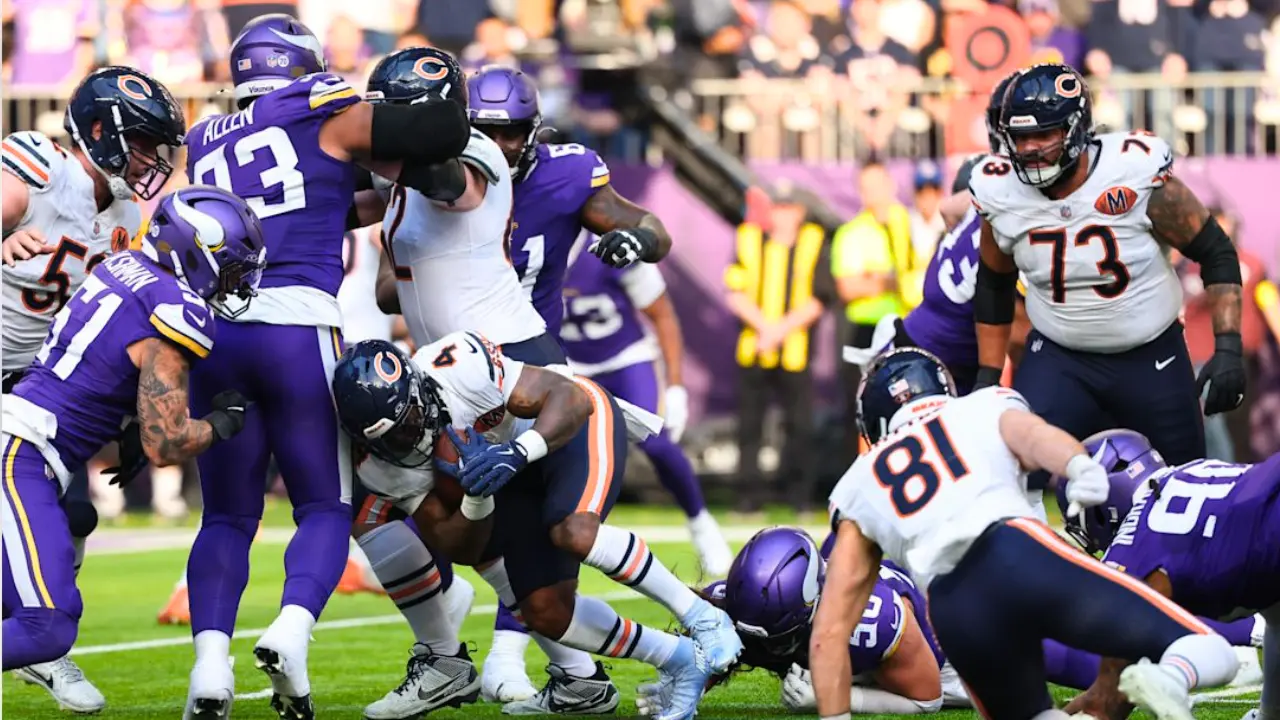
The NFL rivalry between the Minnesota Vikings and the Chicago Bears is one of the most historic and competitive matchups in professional football. Fans, analysts, and fantasy football enthusiasts closely follow every meeting, not just for the final score but for the detailed numbers behind each performance. This article delivers an in-depth look at (Minnesota vikings vs chicago bears match player stats), covering recent games, individual contributions, tactical trends, and how player performances shaped the outcomes.
This comprehensive analysis is designed for readers who want clarity, context, and meaningful insights drawn from real game action, written in a natural, human tone that reflects the intensity of this rivalry.
Historical Context of the Vikings–Bears Rivalry
The Vikings and Bears rivalry dates back to Minnesota’s entry into the NFL in 1961. Since then, the teams have met more than 120 times, making it one of the league’s most frequently played matchups. Chicago built early dominance through defensive consistency, while Minnesota gradually established itself as a powerhouse with explosive offenses and aggressive defensive schemes.
Over the past decade, the balance has shifted slightly toward Minnesota, particularly in games played at U.S. Bank Stadium. However, rivalry games often ignore trends and records, which is why player stats from each matchup tell a deeper story than wins and losses alone.
Overview of Recent Vikings vs Bears Matchups
In the most recent season, the teams faced each other twice during the regular schedule, producing contrasting results. One game leaned heavily on offensive execution and quarterback poise, while the other showcased special teams precision and clock control.
When evaluating minnesota vikings vs chicago bears match player stats, these two games offer a clear picture of how individual performances can dramatically alter momentum, even between evenly matched divisional opponents.
Quarterback Performances That Defined the Games
Quarterback play remains the focal point of every modern NFL matchup, and this rivalry is no exception.
Minnesota Vikings Quarterback Impact
In the early-season meeting, rookie quarterback J.J. McCarthy made his first career start against Chicago. His stat line reflected both promise and pressure. McCarthy completed a high percentage of his passes, throwing for over 140 yards and two touchdowns while adding a rushing score. Despite an interception, his ability to recover and lead scoring drives demonstrated composure uncommon for a first-year starter.
McCarthy’s efficiency on third downs stood out, particularly in the second half, where he converted multiple medium-range situations that kept Minnesota’s offense on the field. These numbers played a crucial role in shaping the overall minnesota vikings vs chicago bears match player stats narrative.
Chicago Bears Quarterback Contribution
On the Chicago side, rookie quarterback Caleb Williams delivered a balanced performance. He surpassed 200 passing yards while also contributing on the ground, leading his team in rushing during the opener. Williams showed strong pocket awareness and mobility, though red-zone efficiency remained an area for improvement.
In the later rematch, Williams managed the game more conservatively, focusing on ball security and short completions. While his passing totals were modest, his ability to avoid turnovers allowed Chicago to remain competitive until the final moments.
Running Game and Rushing Statistics
Rushing efficiency often determines control in divisional games, and both teams leaned on their ground attacks at different points.
Minnesota’s running backs combined for steady yardage, emphasizing inside zone runs to counter Chicago’s pass rush. While no single runner posted explosive numbers, consistent gains on early downs kept the offense balanced.
Chicago, meanwhile, used quarterback scrambles and designed runs to supplement traditional rushing plays. The Bears’ ability to gain crucial first downs on the ground, especially late in games, significantly influenced time of possession and field position, key elements reflected in minnesota vikings vs chicago bears match player stats comparisons.
Receiving Leaders and Passing Targets
Vikings Receiving Corps
Minnesota’s passing attack relied heavily on timing routes and yards after catch. Slot receivers and tight ends played vital roles, particularly in converting third downs. While no receiver posted a massive yardage total, multiple players recorded key catches in high-leverage situations.
This distribution of targets prevented Chicago’s defense from focusing on a single threat and showcased Minnesota’s depth at the skill positions.
Bears Receiving Production
Chicago’s receivers focused on intermediate routes and sideline throws. Rookie wideouts showed flashes of route-running precision, while veteran targets provided reliable hands. The Bears’ receiving stats reflected a methodical approach rather than explosive plays, prioritizing ball control and minimizing risk.
Defensive Standouts and Game-Changing Plays
Defense has always been central to this rivalry, and recent games reinforced that tradition.
Minnesota Vikings Defensive Performance
Minnesota’s defensive front delivered consistent pressure, highlighted by strong performances from veteran linemen. Javon Hargrave recorded multiple sacks and quarterback hits, disrupting Chicago’s offensive rhythm.
Linebackers played disciplined coverage, limiting yards after catch and forcing Chicago into longer third-down situations. These contributions were crucial components of the overall minnesota vikings vs chicago bears match player stats breakdown.
Chicago Bears Defensive Execution
Chicago’s defense responded with strong tackling and situational awareness. The secondary limited deep completions, while the defensive line focused on containing the quarterback. Though sack numbers were modest, pressure consistency forced quicker throws and occasional mistakes.
The Bears’ defense excelled late in games, particularly in the red zone, where they allowed minimal scoring opportunities.
Special Teams The Deciding Factor
Special teams often swing close divisional games, and this rivalry provided a textbook example.
Chicago kicker Cairo Santos delivered one of the season’s defining moments with a long game-winning field goal in the later matchup. His accuracy under pressure highlighted the importance of special teams reliability.
Minnesota’s return units showed flashes of explosiveness but struggled with consistency, occasionally sacrificing field position. These hidden-yardage moments played a measurable role in final outcomes and are an essential part of minnesota vikings vs chicago bears match player stats analysis.
Time of Possession and Game Management
One of the clearest statistical contrasts between the teams appeared in time of possession. In Chicago’s victory, the Bears controlled the ball for nearly two-thirds of the game. Sustained drives kept Minnesota’s offense sidelined and wore down the defense.
Minnesota’s win, by contrast, featured quicker scoring drives and efficient third-down conversions. These differences highlight how tempo and decision-making directly influence player stats and final results.
Red-Zone Efficiency and Scoring Trends
Red-zone performance separated victory from defeat in both games. Minnesota capitalized on early opportunities with touchdowns, while Chicago settled for field goals in key moments.
In the rematch, roles reversed. Chicago finished drives efficiently, while Minnesota struggled to convert inside the 20-yard line. These shifts underscore how situational execution impacts minnesota vikings vs chicago bears match player stats beyond raw yardage totals.
Coaching Strategies Reflected in Player Numbers
Coaching philosophies were clearly visible in the numbers. Minnesota emphasized aggressive play-calling on early downs, trusting young talent to make plays. Chicago leaned on ball control, special teams precision, and defensive discipline.
These strategic differences explain variations in passing attempts, rushing totals, and time of possession across both matchups.
Comparative Team Statistical Summary
When comparing totals across both games:
- Minnesota averaged more yards per play.
- Chicago led in time of possession and special teams scoring impact.
- Turnover margins remained narrow, emphasizing execution over mistakes.
This balanced statistical picture reinforces why this rivalry remains unpredictable and compelling.
What the Stats Say About the Rivalry’s Future
Looking ahead, quarterback development will likely define future meetings. Both teams feature young signal-callers with high ceilings, and their growth will significantly shape upcoming minnesota vikings vs chicago bears match player stats.
Defensive depth and special teams consistency will continue to be deciding factors, particularly in cold-weather games late in the season.
Why These Matchups Matter to Fans and Analysts
Beyond wins and losses, Vikings vs Bears games offer insight into roster construction, coaching adjustments, and player development. Each stat line tells part of a larger story about identity and execution.
For analysts, these games provide valuable benchmarks. For fans, they reinforce why this rivalry remains one of the NFL’s most emotionally charged.
Final Thoughts on Player Performances
The recent encounters between Minnesota and Chicago demonstrated how evenly matched divisional rivals can produce dramatically different outcomes. From quarterback poise to special teams heroics, every contribution mattered.
By examining minnesota vikings vs chicago bears match player stats in detail, fans gain a deeper appreciation for the nuances that define this historic rivalry and shape its future.
Frequently Asked Questions
1. Why are Minnesota Vikings vs Chicago Bears games considered special?
The rivalry spans over six decades, featuring frequent matchups, dramatic finishes, and playoff implications that elevate every meeting.
2. Which position most influences Vikings vs Bears match outcomes?
Quarterback play has become increasingly influential, though defense and special teams often determine close games.
3. How important are special teams in this rivalry?
Special teams have directly decided recent games, particularly through long field goals and field position control.
4. Do home games significantly impact player stats?
Yes, home-field advantage often affects offensive efficiency, crowd-driven momentum, and defensive communication.
5. What should fans watch for in future matchups?
Quarterback development, red-zone efficiency, and defensive depth will be key indicators of future success.
Read More: Minnesota Vikings vs Seahawks Match Player Stats A Complete Informational Breakdown
About the Author